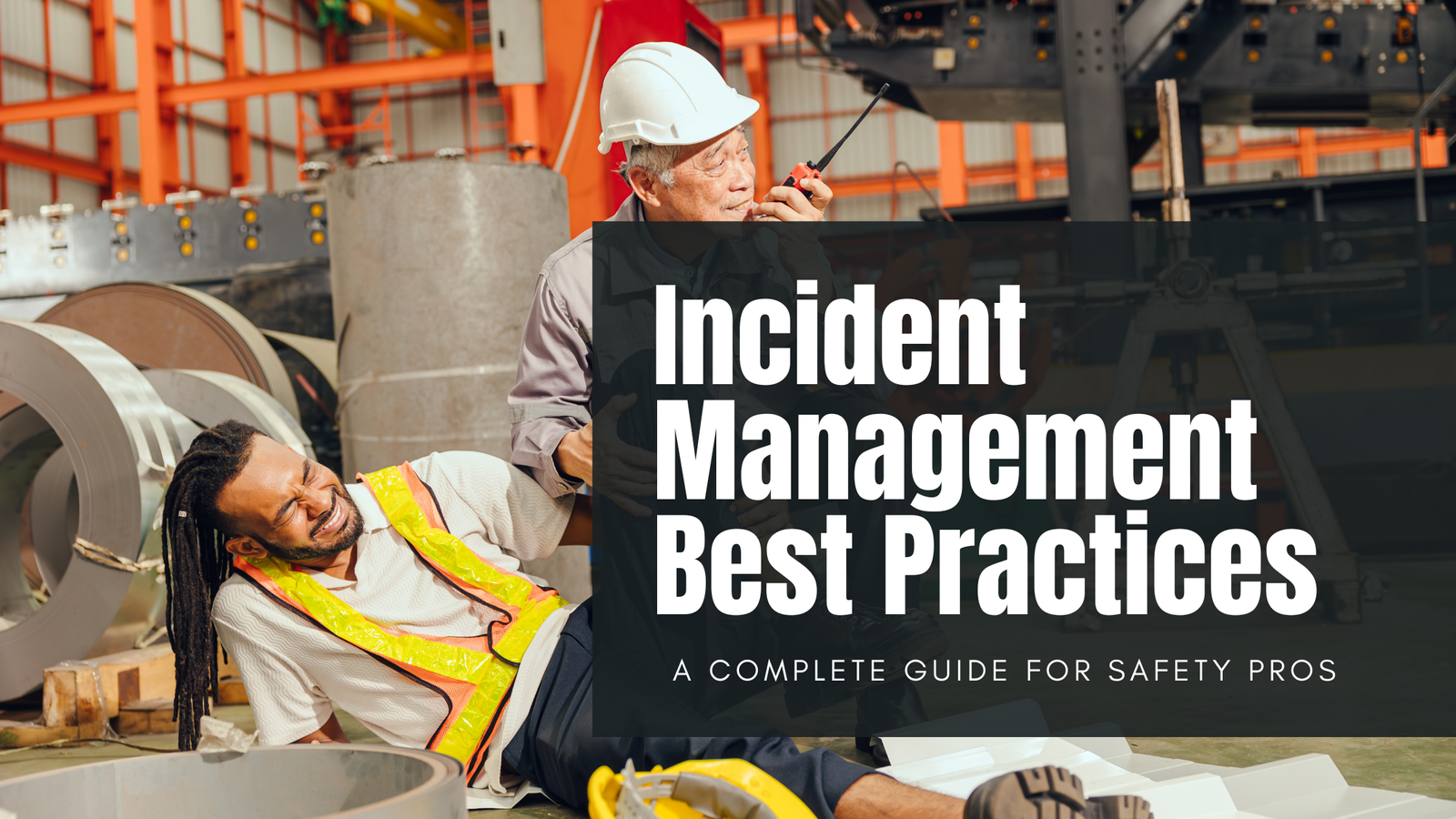
This incident management best practices guide is designed for safety professionals, EHS managers, and organizational leaders responsible for workplace safety.
Why Incident Management Matters for Workplace Safety
Every workplace injury, near miss, and environmental event tells a story. Effective incident management is how organizations capture those stories and use them to prevent the next one.
Incident management is the systematic process of reporting, investigating, and resolving safety events while identifying ways to prevent future incidents. When an incident occurs, organizations need standardized processes to respond quickly, find the root cause, and implement corrective actions that stick.
The cost of getting this wrong is significant:
| Poor Incident Management Leads To | Impact |
|---|---|
| Regulatory penalties | OSHA fines averaging $15,000+ per violation |
| Workers’ compensation claims | Direct costs plus lost productivity |
| Recurring incidents | Same problems happening repeatedly |
| Reputation damage | Eroded trust with workers and stakeholders |
The incident lifecycle provides a framework for managing incidents from first report through incident resolution and beyond. Each phase plays a critical part in protecting workers and business operations.
This guide covers incident management best practices across five areas: preparation, reporting, investigation, post-incident learning, and measurement. The goal is operational excellence in safety, not just compliance.
Preparation: Building Your Foundation
Here’s a truth that nobody wants to hear: the worst time to figure out your incident response process is during an actual emergency. Yet that’s exactly when most organizations discover the gaps in their planning.
Getting prepared before an incident occurs makes everyone’s life easier when things go sideways.
Structuring Your Incident Management Team
Your incident management team needs clearly defined roles before anything happens. Otherwise you end up with ten people standing around asking “who’s handling this?” while the clock ticks.
Think about who fills these roles across your relevant teams:
| Role | Responsibility |
|---|---|
| First responders | Immediate scene safety and initial reporting |
| Investigators | Root cause analysis and evidence gathering |
| Supervisors | Coordination between operations teams and support teams |
| Safety manager | Overall process ownership and regulatory compliance |
When many teams are involved, confusion multiplies. Define handoffs clearly so your response team knows exactly when their part begins and ends.
Creating Your Incident Response Plan
Your incident response plan is a playbook for when things go wrong. It should include standardized processes for different scenarios, from minor first aid cases to major incident events requiring emergency response.
Good plans answer these questions in advance:
- Who gets notified, and in what order?
- What triggers an escalation?
- When do regulators need to be contacted?
- Where does documentation live?
Document it. Make it findable. Train people on it.
Building a Knowledge Base
Your knowledge base is where organizational memory lives. Every investigation, every corrective action, every lesson learned should land somewhere searchable.
When a new incident looks familiar, your team should be able to pull historical data on similar incidents in seconds. That historical record becomes invaluable for spotting patterns and avoiding repeat mistakes.
The best predictor of tomorrow’s incident is often yesterday’s near miss.
Reporting and Classification: When an Incident Occurs
The best incident management process in the world means nothing if nobody reports what happened. And getting people to actually report things? That requires removing every possible barrier.
Making Reporting Easy
When an incident occurs, the clock starts ticking. You want information captured while memories are fresh and details are clear. That means reporting needs to happen in a timely fashion, which only works if the process is simple.
If your reporting system requires a 20-minute form and a desktop computer, you’ve already lost. Mobile-friendly reporting wins every time.
But the bigger issue is usually company culture. Workers need to trust that reporting a near miss won’t land them in trouble. Building a work environment where honesty is rewarded takes time, but it pays off in data you can actually use.
Classifying and Prioritizing Incidents
Not every incident demands the same response. A paper cut and a fall from height require very different levels of attention.
Your team needs a clear framework to prioritize incidents based on severity:
| Classification | Examples | Response Level |
|---|---|---|
| Critical incidents | Fatalities, amputations, hospitalizations | Immediate attention, regulatory notification |
| Major incident | Serious injuries, large spills | Same-day investigation |
| Significant incidents | Recordable injuries, equipment damage | Investigation within 48 hours |
| Minor incidents | First aid, near misses | Documented, reviewed weekly |
When high priority incidents come in, everyone should know exactly what happens next. No guessing, no delays.
The Incident Report
A good incident report captures the basics: who, what, when, where, and how. Witness statements and photos help tremendously.
The goal is giving investigators enough information to understand the specific incident without playing detective later. Notify relevant parties promptly and document everything.
Investigation and Resolution: Managing Active Incidents
This is where the real work happens. An incident has occurred, the report is in, and now someone needs to figure out what actually went wrong. The quality of your investigation determines whether you fix the problem or just put a bandage on it.
Launching the Investigation
Once your incident management team gets activated, the first priority is securing the scene. Evidence disappears quickly. Machines get cleaned. People forget details. Move fast.
Assign investigators based on the incident type and make sure relevant teams understand their roles. The key here is teams focus on gathering facts, not assigning blame. The moment people feel like they’re being set up for punishment, the information flow stops.
Root Cause Analysis
Here’s where most investigations fall short. Someone gets hurt, and the conclusion is “worker wasn’t paying attention.” Case closed.
Except that explains nothing. Why weren’t they paying attention? Were they rushed? Fatigued? Undertrained? The surface explanation is almost never the root cause.
Good investigators dig into contributing factors across multiple categories:
| Category | Questions to Ask |
|---|---|
| Equipment | Was it functioning properly? Maintained recently? |
| Training | Did the worker know the correct procedure? |
| Procedures | Were they clear, current, and accessible? |
| Environment | Lighting, noise, temperature, distractions? |
| Management | Was there pressure to skip steps or rush? |
Human error is usually a symptom of systemic issues, not a root cause. Keep asking “why” until you find something you can actually fix.
Communication During Investigations
Investigations involve a lot of people who need different information. Your internal stakeholders like management, HR, and legal need regular updates. External stakeholders like regulators and insurers may require formal notification for serious events.
The trick is to communicate effectively without speculation. Stick to confirmed facts and be clear about what you’re still investigating.
Corrective Actions and Resolution
Finding the root cause accomplishes nothing if you stop there. Incident resolution requires corrective actions with real ownership and real deadlines.
To resolve incidents completely:
- Assign each action to a specific person
- Set realistic due dates
- Verify implementation, don’t just trust that it happened
- Document everything for the historical record
Strong response times on corrective actions signal that your organization takes safety seriously. Slow follow-through signals the opposite.
Post-Incident: Learning and Preventing Recurrence
Closing an investigation feels like crossing a finish line. The report is done, corrective actions are assigned, and everyone moves on. But this is actually where the most valuable work begins.
Organizations that learn from incidents get safer. Organizations that just document them keep having the same problems.
Conducting Post-Incident Reviews
A post incident review is your chance to step back and ask what really happened. Not just the immediate facts, but the bigger picture. What worked well? What fell apart? What would we do differently?
The key is creating a work environment where honesty is safe. If people fear blame, they’ll give you polished answers instead of useful ones. Bring in relevant teams who were involved and let them speak freely.
Document the lessons learned and add them to your knowledge base. Institutional memory only works if someone writes it down.
Identifying Patterns and Trends
One incident is a data point. Ten incidents are a trend. The organizations that identify areas of concern early are the ones that prevent serious injuries.
Start looking for patterns in your historical data:
- Are similar incidents happening at specific locations or shifts?
- Do recurring incidents share common contributing factors?
- What incident trends are moving in the wrong direction?
Spotting these patterns is how you get ahead of future incidents instead of constantly reacting.
Driving Continuous Improvement
Learning means nothing without action. Feed your findings back into your incident response plan and update your standardized processes based on what you discover.
This creates a loop that helps you continuously improve:
| Step | Action |
|---|---|
| Review | Analyze incidents and near misses |
| Learn | Identify systemic fixes |
| Update | Revise procedures and training |
| Repeat | Keep the cycle going |
Building a company culture of operational excellence takes time. But every improvement compounds. The organization you have next year depends on the lessons you apply today.
Tools and Measurement
Spreadsheets work until they don’t. At some point, managing incidents across multiple locations with shared documents and email chains becomes unsustainable. That’s when incident management software starts looking very attractive.
Key Features to Look For
Not all platforms are created equal. When evaluating options, look for these key features:
- Mobile reporting so workers can submit incidents from anywhere
- Investigation workflows that guide your team through the process
- Corrective action tracking with ownership and due dates
- Complete visibility across all locations and departments
- Analytics that surface patterns automatically
The right tool should make your job easier, not create more administrative work.
Automating Routine Tasks
Incident automation handles the repetitive stuff so your team can focus on prevention. Automatic notifications, escalation reminders, and report routing reduce manual intervention and save time on every incident.
When the system handles the busywork, safety professionals can spend their energy on what actually matters.
Measuring Performance
You can’t improve what you don’t measure. Track the metrics that matter:
| Metric | Why It Matters |
|---|---|
| Response times | How quickly incidents get addressed |
| Investigation completion | Are investigations finishing on schedule? |
| Corrective action closure | Are fixes actually getting implemented? |
| Incident trends | Are things getting better or worse? |
Use historical data to benchmark against incident management best practices and continuously improve over time.
Best Practices: Incident Management
Effective incident management is a loop, not a line. Each phase plays a critical part in protecting workers and keeping business operations running smoothly.
The organizations that get this right share a few things in common:
- They prepare before incidents happen
- They make reporting easy and blame-free
- They investigate root causes, not just symptoms
- They learn from every event and apply those lessons
Managing incidents well requires commitment. But the payoff is real: fewer injuries, faster incident resolution, and a culture where safety keeps improving.
The goal is simple. Protect people. Learn from what goes wrong. Build systems that prevent the next incident before it happens.
Start with the phase where your organization struggles most, and build from there.
Ready to Simplify Your Incident Management?
Tracking incidents across spreadsheets and email chains gets old fast. EHSpro brings reporting, investigation, corrective actions, and analytics into one platform built for safety professionals.
What you get:
- Mobile incident reporting from anywhere
- Guided investigation workflows with root cause tools
- Corrective action tracking that actually closes the loop
- Real-time visibility across all your locations
Stop chasing paperwork. Start preventing incidents.
See EHSpro in action. Join for free today.